
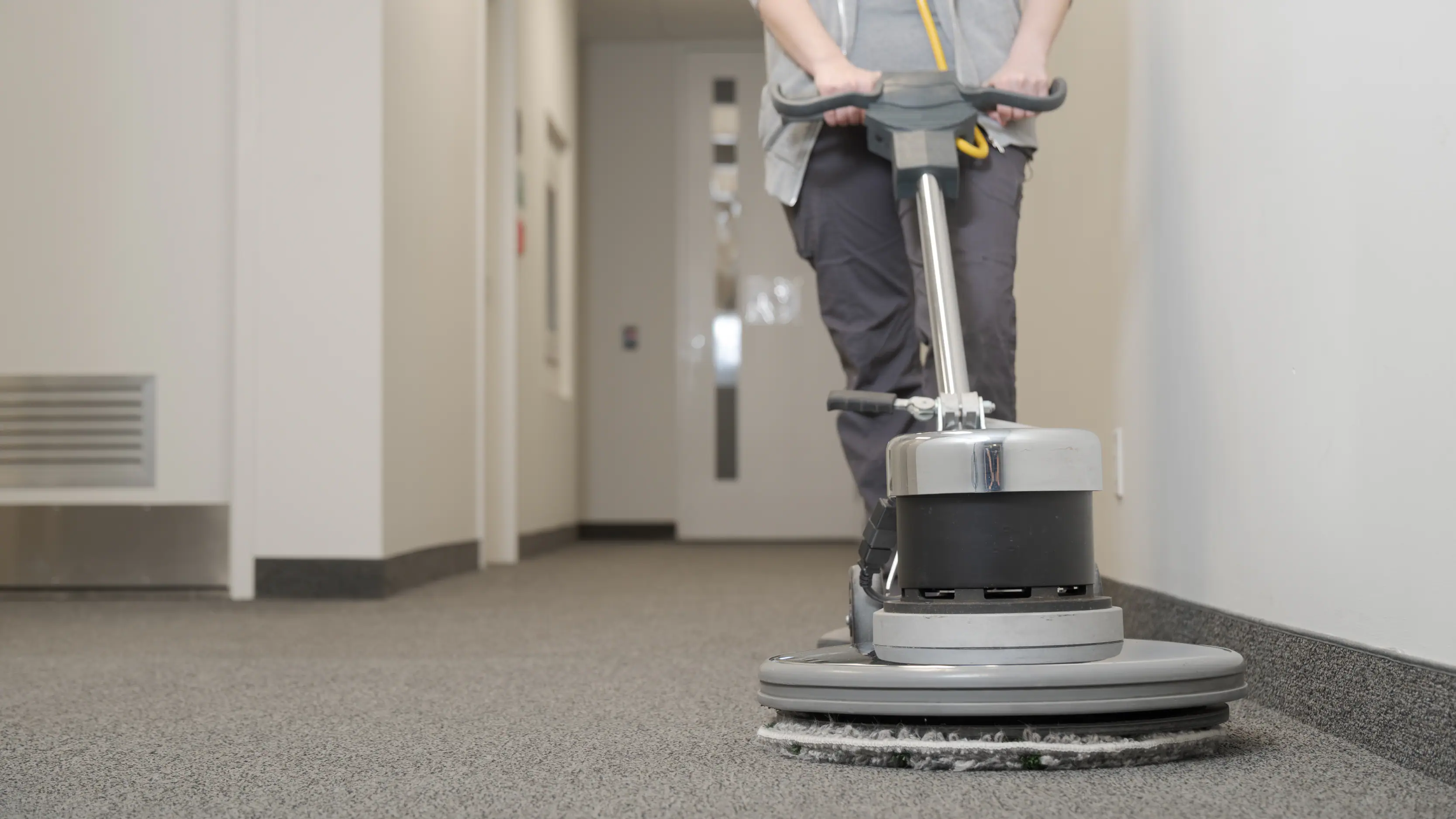
Deep Carpet Cleaning for Commercial Spaces in Dallas TX
Professional commercial carpet cleaning services that remove deep-seated dirt, stains, and allergens from your business carpets. Our hot water extraction method delivers superior results while extending carpet life.
Professional commercial carpet cleaning is essential for maintaining a healthy, attractive business environment. Our hot water extraction method removes deep-seated dirt, allergens, and stains that regular vacuuming cannot address, extending the life of your carpet investment while creating a cleaner indoor environment for employees and customers.
The Science of Hot Water Extraction
Hot water extraction, often called steam cleaning, represents the gold standard in carpet cleaning technology. This method injects hot water and specialized cleaning solutions deep into carpet fibers at high pressure, immediately extracting the dissolved soil and contaminants. Unlike surface cleaning methods, hot water extraction reaches the carpet backing where the majority of dirt and allergens accumulate.
Our equipment maintains water temperatures above 200 degrees Fahrenheit, which is necessary to break down oily soils and kill dust mites, bacteria, and other microorganisms living in carpet fibers. The powerful extraction system then removes over 95% of the moisture along with the suspended soils, leaving carpets clean and significantly reducing drying time.
Commercial Carpet Cleaning Process
Every commercial carpet cleaning project begins with a thorough inspection to identify fiber type, soiling conditions, and any areas requiring special attention. We apply a pre-treatment solution that begins breaking down soils and spots before the main cleaning process begins.
High-traffic areas receive extra attention with specialized agitation equipment that works the cleaning agents deep into the carpet pile. Our technicians then use truck-mounted extraction equipment for superior cleaning power and faster drying times. After cleaning, we apply carpet protectors upon request and groom the carpet pile for a uniform appearance.
Benefits of Professional Carpet Maintenance
Regular professional carpet cleaning provides benefits that extend far beyond appearance. Clean carpets contribute to better indoor air quality by removing allergens, dust, and pollutants that would otherwise become airborne. This can lead to reduced employee sick days and improved productivity.
Professional cleaning also extends carpet life significantly by removing abrasive soils that damage carpet fibers with every footstep. With proper maintenance, commercial carpets can last years longer than neglected flooring, providing substantial return on investment.
Industries We Serve
- Corporate offices and professional buildings
- Healthcare facilities and medical offices
- Hotels and hospitality venues
- Retail stores and shopping centers
- Educational institutions
- Industrial and warehouse facilities
Eco-Friendly Cleaning Solutions
We are committed to environmental responsibility in all our cleaning operations. Our green cleaning solutions are biodegradable, non-toxic, and safe for employees, customers, and the environment. These products clean effectively without leaving harmful residues that can affect indoor air quality or cause skin irritation.
Frequently Asked Questions About Commercial Carpet Cleaning in Dallas
How often should commercial carpets be cleaned in Dallas?
For Dallas businesses, we recommend commercial carpet cleaning every 3-6 months depending on foot traffic. High-traffic areas may require monthly cleaning, while lower-traffic spaces can be cleaned semi-annually.
What carpet cleaning method do you use?
We use hot water extraction (steam cleaning) which is the most effective method for deep cleaning commercial carpets. This method removes deep-seated dirt, allergens, and stains while extending carpet life.
How long does it take for carpets to dry?
With our advanced equipment, carpets typically dry within 4-6 hours. We use powerful extraction equipment that removes most moisture during the cleaning process.
Related Cleaning Services in Dallas
Warehouse Cleaning Services
Comprehensive warehouse cleaning services tailored for Dallas industrial facilities. From high-dust ...
Medical Facility Sanitization
Specialized medical facility sanitization services meeting strict healthcare standards. Our trained ...
Commercial Carpet Restoration and Repair
Professional carpet restoration and repair services that save Dallas businesses the cost of replacem...
Ready for a Cleaner Facility in Dallas?
Contact us today to schedule your commercial carpet cleaning service. Free estimates available for all Dallas area businesses.
Schedule Service Todayservices planning guide
How to plan commercial carpet cleaning for a commercial facility in Dallas
Commercial Cleaning of Dallas uses the following planning framework to help property managers and business owners turn a request for commercial cleaning and janitorial service into a scope that can be walked, priced, scheduled, and checked. It is designed for practical comparison and does not replace site-specific safety, material, vendor, or regulatory requirements.
Define the Work Before Pricing It
Before pricing commercial carpet cleaning, document exclusions as carefully as inclusions. Exterior work, high access, consumable supplies, waste handling, specialty floor restoration, equipment interiors, and event cleanup can be scheduled correctly only when responsibility is explicit. A commercial scope should distinguish appearance cleaning from hygiene work and asset maintenance. Dust removal, disinfection, floor finish care, glass restoration, and debris control solve different problems, use different processes, and often belong on different frequencies. For multi-tenant or mixed-use properties, commercial carpet cleaning should be divided by responsibility zone. Common areas, tenant suites, back-of-house spaces, loading areas, public restrooms, and restricted rooms can then receive schedules and approval rules that match their actual use. Commercial Carpet Cleaning should begin with a written definition of the rooms, surfaces, fixtures, equipment boundaries, and access conditions included in the work. A useful scope separates routine tasks from periodic restoration so the facility manager can see what happens on every visit and what occurs only on a planned cycle.
Build the Schedule Around Operations
Scheduling should be built around operating hours and risk, not around the cleaning company’s convenience. Some commercial facility environments need a complete after-hours reset, while others benefit from daytime attention to entrances, restrooms, spills, or high-traffic common areas. For Dallas–Fort Worth properties, travel windows and building access can materially affect the usable service period. A realistic schedule accounts for security handoffs and operating deadlines rather than promising a start time that leaves too little time to finish. Access planning is part of service planning. Keys, badges, alarm procedures, loading access, elevator reservations, escort rules, and locked-room approvals should be confirmed before the first commercial carpet cleaning visit so the crew can complete the full scope without improvising. Recurring commercial carpet cleaning should include planned periodic work instead of waiting for visible deterioration. Rotating detail tasks through monthly or quarterly cycles protects floors, fixtures, glass, vents, edges, and other zones that routine visits cannot address completely.
Make Quality Control Observable
Quality control works best when it is tied to the site-specific scope. A supervisor can inspect completion against named rooms and outcomes, record exceptions, assign corrections, and identify patterns that require a change in staffing, tools, or frequency. The account review should examine service requests, inspection findings, occupancy changes, supply use, and upcoming facility events. That review keeps the program aligned with the property instead of allowing an old scope to continue after the building changes. A quality program should explain how corrections are handled. The facility contact needs a clear response path, a reasonable correction window, and confirmation when the issue is closed rather than a vague assurance that someone will look into it. A single complaint channel prevents service issues from disappearing between building occupants, property management, and the cleaning crew. Requests should be logged with the location, task, urgency, and desired completion time so the response can be verified.
Match Methods to Materials and Risk
For sensitive or newly installed materials, a small test area can prevent expensive mistakes. The service plan should identify who approves the test result before broader cleaning or restoration proceeds. Product selection should match the task and the occupied environment. Cleaning, degreasing, disinfecting, descaling, and finishing are different functions; using one product for every surface can leave residue, reduce effectiveness, or shorten asset life. Surface identification matters because a process that works on one material can damage another. Before commercial carpet cleaning, confirm flooring, stone, coated metal, glass treatments, upholstery, painted surfaces, and manufacturer restrictions that affect chemistry or agitation. Color-coded cloths, pads, and tools can reduce cross-use between restrooms, food areas, workspaces, and public surfaces. The exact system matters less than having a documented method the crew can follow consistently.
Use the Walkthrough to Build the Scope
Access and safety constraints should be demonstrated, not merely mentioned. Alarm panels, loading doors, restricted areas, waste points, water access, electrical access, and equipment storage can change the labor plan materially. Ask department leads or regular occupants where cleaning failures are most visible. Facility managers often know the formal complaints, while daily users can identify recurring issues such as neglected corners, supply shortages, or timing conflicts. The walkthrough should follow the facility’s traffic pattern from entrances through work areas, restrooms, support rooms, and exits. This reveals where soil enters, where it concentrates, and which tasks must be completed in a particular order. Discuss current service honestly during the walkthrough. What works should be preserved, what fails should be corrected, and any unrealistic expectation should be resolved before it becomes a recurring dispute after startup.
Put the Service Agreement in Writing
A structured startup period gives both sides a chance to refine the scope. Early inspections and a scheduled review after the first few visits can resolve workload assumptions before they become embedded in a long-term program. The agreement should explain how additional work is approved. Emergency cleanup, event service, construction dust, floor restoration, and extra porter coverage should not be performed or billed through an informal request that no one can later verify. Service-level expectations should be realistic and observable. A promise of “perfect cleaning” is less useful than response times, inspection routines, named completion outcomes, and an escalation process for repeated deficiencies. Cancellation, renewal, and notice terms deserve the same attention as the cleaning checklist. A facility manager comparing proposals should understand the initial term, renewal method, price-review process, and the notice required to change or end service.
Plan for Dallas Facility Conditions
A local service plan should account for the property’s immediate environment. Construction nearby, open parking, landscaping, loading activity, and pedestrian traffic can change how quickly dust and debris return after a visit. Heat and air-conditioning runtime can increase dust movement through vents, ledges, high surfaces, and return-air zones. Periodic detail work should be scheduled before accumulation becomes visible or begins cycling back into occupied areas. Dallas facilities contend with long cooling seasons, tracked-in dust, pollen, severe-weather debris, and rapid development activity. Those conditions can influence entry cleaning, high dusting, floor care, glass maintenance, and the timing of periodic deep work. Fast regional growth creates frequent move-ins, renovations, tenant turnovers, and occupancy changes. The cleaning scope should be reviewed when a property changes use instead of assuming the previous tenant’s schedule remains appropriate.
Compare Providers on More Than Price
Review the proposal for vague language. Terms such as “as needed,” “regularly,” and “periodically” should be converted into frequencies, triggers, or approval rules before the agreement is signed. Consider the cost of under-scoping. Persistent complaints, damaged finishes, emergency restoration, staff time spent supervising the vendor, and repeated provider changes can cost more than a properly designed recurring program. Evaluate communication alongside cleaning technique. A facility manager needs timely updates, a named account contact, documented service requests, and a reliable process for resolving issues without repeatedly explaining the account. The final decision should align service frequency with the facility’s real use. Buying fewer visits than the property needs creates visible decline; buying unnecessary frequency wastes budget that could be directed to periodic or high-priority work.
Start, Measure, and Adjust the Program
Task sequencing affects results. High dusting should precede lower-surface cleaning, dry soil removal should precede wet work, and areas with restricted reopening times should be completed early enough to dry or ventilate. The crew should record conditions outside the approved scope rather than quietly ignoring them or performing unapproved work. Photos and concise notes allow the facility manager to decide whether a separate service is warranted. The first visit should not be treated as an ordinary maintenance visit when buildup already exists. Startup cleaning establishes a maintainable baseline and gives the crew a realistic view of the time required for future service. A stable program still needs review after renovations, staffing growth, seasonal traffic, operating-hour changes, or new equipment. Each change can alter soil load, access, or the time available for commercial carpet cleaning.
Bring to the walkthrough
- Approximate square footage, floor plan, and operating hours
- Current frequency, known complaints, and priority areas
- Flooring and surface notes, restricted rooms, and access rules
- Desired start date, budget constraints, and approval contacts
Expect in a written proposal
- Task scope by zone and visit frequency
- Service windows, periodic work, and supply responsibility
- Quality checks, communication, and correction procedures
- Pricing assumptions, exclusions, and change-order rules